
Reading Passage 1 – How Well Do We Concentrate?
You should spend about 20 minutes on Questions 1-13, which are based on Reading Passage 1 below.

A
Do you read while listening to music? Do you like to watch TV while finishing your homework? People who have these kinds of habits are called multi-taskers. Multitaskers are able to complete two tasks at the same time by dividing their focus. However, Thomas Lehman, a researcher in Psychology, believes people never really do multiple things simultaneously. Maybe a person is reading while listening to music, but in reality, the brain can only focus on one task. Reading the words in a book will cause you to ignore some of the words of the music. When people think they are accomplishing two different tasks efficiently, what they are really doing is dividing their focus. While listening to music, people become less able to focus on their surroundings. For example, we all have experience of times when we talk with friends and they are not responding properly. Maybe they are listening to someone else talk, or maybe they are reading a text on their smart phone and don’t hear what you are saying. Lehman called this phenomenon “email voice”
B
the world has been changed by computers and its spin offs like smart-phones or cellphones. Now that most individuals have a personal device, like a smart-phone or a laptop, they are frequently reading, watching or listening to virtual information. This raises the occurrence of multitasking in our day to day life. Now when you work, you work with your typewriter, your cellphone, and some colleagues who may drop by at any time to speak with you. In professional meetings, when one normally focuses and listens to one another, people are more likely to have a cell phone in their lap, reading or communicating silently with more people than ever, liven inventions such as the cordless phone has increased multitasking. In the old days, a traditional wall phone would ring, and then the housewife would have to stop her activities to answer it. When it rang, the housewife will sit down with her legs up. and chat, with no laundry or sweeping or answering the door. In the modern era, our technology is convenient enough to not interrupt our daily tasks.
C
Earl Miller, an expert at the Massachusetts Institute of Technology, studied the prefrontal cortex, which controls the brain while a person is multitasking. According to his studies, the size of this cortex varies between species, He found that for humans, the size of this part constitutes one third of the brain, while it is only 4 to 5 percent in dogs, and about 15% in monkeys. Given that this cortex is larger on a human, it allows a human to be more flexible and accurate in his or her multitasking.. However, Miller wanted to look further into whether the cortex was truly processing information about two different tasks
simultaneously. He designed an experiment where he presents visual stimulants to his subjects in a wax that mimics multi-tasking. Miller then attached sensors to the patients ” heads to pick up the electric patterns of the brain. This sensor would show if ” the brain particles, called neurons, were truly processing two different tasks. What he found is that the brain neurons only lit up in singular areas one at a time, and never simultaneously.
D
Davis Meyer, a professor of University of Michigan, studied the young adults in a similar experiment. He instructed them to simultaneously do math problems and classify simple words into different categories. For this experiment. Meyer found that when you think you are doing several jobs at the same time, you are actually switching between jobs. Even though the people tried to do the tasks at the same time, and both tasks were eventually accomplished, overall, the task look more time than if the person focused on a single task one at a time.
E
People sacrifice efficiency when multitasking, Gloria Mark set office workers as his subjects. He found that they were constantly multitasking. He observed that nearly every 11 minutes people at work were disrupted. He found that doing different jobs at the same time may actually save time. However, despite the fact that they are faster, it does not mean they are more efficient. And we are equally likely to self-interrupt as be interrupted by outside sources. He found that in office nearly every 12 minutes an employee would stop and with no reason at all, cheek a website on their computer, call someone or write an email. If they concentrated for more than 20 minutes, they would feel distressed. He suggested that the average person may suffer from a short concentration span. This short attention span might be natural, but others suggest that new technology may be the problem. With cellphones and computers at our sides at all times, people will never run out of distractions. The format of media, such as advertisements, music, news articles and TV shows are also shortening, so people are used to paying attention to information for a very short time
F
So even though focusing on one single task is the most efficient way for our brains to work, it is not practical to use this method in real life. According to human nature, people feel more comfortable and efficient in environments with a variety of tasks, Edward Hallowell said that people are losing a lot of efficiency in the workplace due to multitasking, outside distractions and self-distractions. As it matter of fact, the changes made to the workplace do not have to be dramatic. No one is suggesting we ban e-mail or make employees focus on only one task. However, certain common workplace tasks, such as group meetings, would be more efficient if we banned cell-phones, a common distraction. A person can also apply these tips to prevent self-distraction. Instead of arriving to your office and checking all of your e-mails for new tasks, a common workplace ritual, a person could dedicate an hour to a single task first thing in the morning. Self-timing is a great way to reduce distraction and efficiently finish tasks one by one, instead of slowing ourselves down with multi-tasking.
Reading Passage 2 – The Extraordinary Watkin Tench
You should spend about 20 minutes on Questions 14-26, which are based on Reading Passage below.
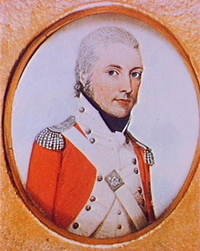
At the end of 18th century, life for the average British citizen was changing. The population grew as health and industrialisation took hold of the country. However, land and resources were limited. Families could not guarantee jobs for all of their children. People who were poor or destitute had little option. To make things worse, the rate of people who turned to crime to make a living increased. In Britain, the prisons were no longer large enough to hold the convicted people of this growing criminal class. Many towns and governments were at a loss as to what to do. However, another phenomenon that was happening in the 18th century was I exploration of other continents. There were many ships looking for crew members who would risk a month-long voyage across a vast ocean. This job was risky and dangerous, so few would willingly choose it. However, with so many citizens without jobs or with criminal convictions, they had little choice. One such member of this new lower class of British citizens was Watkin Tench. Between 1788 and 1868, approximately 161,700 convicts were transported to the Australian colonies of New South Wales, Van Diemen’s land and Western Australia. Tench was one of these unlucky convicts to sign onto a dangerous journey. When his ship set out in 1788, he signed a three years’ service to the First Fleet.
Apart from his years in Australia, people knew little about his life back in Britain. It was said he was born on 6 October 1758 at Chester in the county of Cheshire in England. He came from a decent background. Tench was a son of Fisher Tench, a dancing master who ran a boarding school in the town and Margaritta Tarleton of the Liverpool Tarletons. He grew up around a finer class of British citizens, and his family helped instruct the children of the wealthy in formal dance lessons. Though we don’t know for sure how Tench was educated in this small British town, we do know that he was well educated. His diaries from his travels to Australia are written in excellent English, a skill that not everyone was lucky to possess in the 18th century. Aside from this, we know little of Tench’s beginnings. We don’t know how he ended up convicted of a crime. But after he started his voyage, his life changed dramatically.
During the voyage, which was harsh and took many months, Tench described landscape of different places. While sailing to Australia, Tench saw landscapes that were unfamiliar and new to him. Arriving in Australia, the entire crew was uncertain of what was to come in their new life. When they arrived in Australia, they established a British colony. Governor Philip was vested with complete authority over the inhabitants of the colony. Though still a young man, Philip was enlightened for his age. From stories of other British colonies, Philip learnt that conflict with the original peoples of the land was often a source of strife and difficulties. To avoid this, Philip’s personal intent was to establish harmonious relations with local Aboriginal people. But Philip’s job was even more difficult considering his crew. Other colonies were established with middle-class merchants and craftsmen. His crew were convicts, who had few other skills outside of their criminal histories. Along with making peace with the Aboriginal people, Philip also had to try to reform as well as discipline the convicts of the colony.
From the beginning, Tench stood out as different from the other convicts. During his initial time in Australia, he quickly rose in his rank, and was given extra power and responsibility over the convicted crew members. However, he was also still very different from the upper-class rulers who came to rule over the crew. He showed humanity towards the convicted workers. He didn’t want to treat them as common criminals, but as trained military men. Under Tench’s authority, he released the convicts’ chains which were used to control them during the voyage. Tench also showed mercy towards the Aboriginal people. Governor Philip often pursued violent solutions to conflicts with the Aboriginal peoples. Tench disagreed strongly with this method. At one point, he was unable to follow the order given by the Governor Philip to punish the ten Aboriginals.
When they first arrived, Tench was fearful and contemptuous towards the Aboriginals, because the two cultures did not understand each other. However, gradually he got to know them individually and became close friends with them. Tench knew that the Aboriginal people would not cause them conflict if they looked for a peaceful solution. Though there continued to be conflict and violence, Tench’s efforts helped establish a more peaceful negotiation between the two groups when they settled territory and land-use issues.
Meanwhile, many changes were made to the new colony. The Hawkesbury River was named by Governor Philip in June 1789. Many native bird species to the river were hunted by travelling colonists. The colonists were having a great impact on the land and natural resources. Though the colonists had made a lot of progress in the untamed lands of Australia, there were still limits. The convicts were notoriously ill-informed about Australian geography, as was evident in the attempt by twenty absconders to walk from Sydney to China in 1791, believing: “China might be easily reached, being not more than a hundred miles distant, and separated only by a river.” In reality, miles of ocean separated the two.
Much of Australia was unexplored by the convicts. Even Tench had little understanding of what existed beyond the established lines of their colony. Slowly, but surely, the colonists expanded into the surrounding area. A few days after arrival at Botany Bay, their original location, the fleet moved to the more suitable Port Jackson where a settlement was established at Sydney Cove on 26 January 1788. This second location was strange and unfamiliar, and the fleet was on alert for any kind of suspicious behaviors. Though Tench had made friends in Botany Bay with Aboriginal peoples, he could not be sure this new land would be uninhabited. He recalled the first time he stepped into this unfamiliar ground with a boy who helped Tench navigate. In these new lands, he met an old Aboriginal.
You need to be registered and logged in to take this quiz. Log in