
Reading Passage 1 – California’s age of Megafires
You should spend about 20 minutes on Questions 1-13, which are based on Reading Passage 1 below.
A
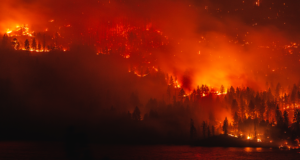
There’s a reason fire squads now battling more than a dozen blazes in southern California are having such difficulty containing the flames, despite better preparedness than ever and decades of experience fighting fires fanned by the notorious Santa Ana winds. The wildfires themselves, experts say, generally are hotter, move faster, and spread more erratically than in the past.
B
The short-term explanation is that the region, which usually has dry summers, has had nine inches less rain than normal this year. Longer-term, climate change across the West is leading to hotter days on average and longer fire seasons. Experts say this is likely to yield more megafires like the conflagrations that this week forced evacuations of at least 300,000 resident in California’s southland and led President Bush to declare a disaster emergency in seven counties on Tuesday.
C
Megafires, also called “siege fires,” are the increasingly frequent blazes that burn 500,000 acres or more – 10 times the size of the average forest fire of 20 years ago. One of the current wildfires is the sixth biggest in California ever, in terms of acreage burned, according to state figures and news reports. The trend to more superhot fires, experts say, has been driven by a century-long policy of the US Forest Service to stop wildfires as quickly as possible. The unintentional consequence was to halt the natural eradication of underbrush, now the primary fuel for megafires. Three other factors contribute to the trend, they add. First is climate change marked by a 1-degree F. rise in average yearly temperature across the West. Second is a fire season that on average is 78 days longer than in the late 1980s. The third is the increased building of homes and other structures in wooded areas.
D
“We are increasingly building our homes … in fire-prone ecosystems,” says Dominik Kulakowski, adjunct professor of biology at Clark University Graduate School of Geography in Worcester, Mass. Doing that “in many of the forests of the Western US … is like building homes on the side of an active volcano.” In California, where population growth has averaged more than 600,000 a year for at least a decade, housing has pushed into such areas. “What once was open space is now residential homes providing fuel to make fires burn with greater intensity,” says Terry McHale of the California Department of Forestry firefighters union. “With so much dryness, so many communities to catch fire, so many fronts to fight, it becomes an almost incredible job.”
E
That said, many experts give California high marks for making progress on preparedness since 2003, when the largest fires in state history scorched 750,000 acres, burned 3,640 homes, and killed 22 people. Stung then by criticism of bungling that allowed fires to spread when they might have been contained, personnel are meeting the peculiar challenges of a neighborhood – and canyon-hopping fires better than in recent years, observers say.
F
State promises to provide newer engines, planes, and helicopters have been fulfilled. Firefighters unions that then complained of dilapidated equipment, old fire engines and insufficient blueprints for fire safety are now praising the state’s commitment, noting that funding for firefighting has increased despite huge cuts in many other programs. “We are pleased that the Schwarzenegger administration has been very proactive in its support of us and come through with budgetary support of the infrastructure needs we have long sought,” says Mr McHale with the firefighters union.
G
Besides providing money to upgrade the fire engines that must traverse the mammoth state and wind along serpentine canyon roads, the state has invested in better command-and-control facilities as well as the strategies to run them. “In the fire sieges of earlier years, we found out that we had the willingness of mutual-aid help from other jurisdictions and states, but we were not able to communicate adequately with them,” says Kim Zagaris, chief of the state’s Office of Emergency Services, fire and rescue branch. After a 2004 blue-ribbon commission examined and revamped those procedures, the statewide response “has become far more professional and responsive,” he says.
H
Besides ordering the California National Guard on Monday to make 1,500 guardsmen available for firefighting efforts, Gov. Arnold Schwarzenegger asked the Pentagon to send all available Modular Airborne Fighting Systems to the area. The military Lockheed C-130 cargo/utility aircraft carry a pressurized 3,000-gallon tank that can eject fire retardant or water in fewer than five seconds through two tubes at the rear of the plane. This load can cover an area 1/4-mile long and 60 feet wide to create a fire barrier. Governor Schwarzenegger also directed 2,300 inmate firefighters and 170 custody staff from the California Department of Corrections and Rehabilitation to work for hand in hand with state and local firefighters.
I
Residents and government officials alike are noting the improvements with gratitude, even amid the loss of homes, churches, businesses, and farms. By Tuesday morning, the fires had burned 1,200 homes and businesses and set 245,957 acres – 384 square miles – ablaze. Despite such losses, there is a sense that the speed, dedication, and coordination of firefighters from several states and jurisdictions are resulting in greater efficiency than is past “siege fire” situations.
J
“I am extraordinarily impressed by the improvements we have witnessed between the last big fire and this,” says Ross Simmons, a San Diego-based lawyer who had to evacuate both his home and business on Monday, taking up residence at a Hampton Inn 30 miles south of his home in Rancho Bernardo. After fires consumed 172,000 acres there in 2003, the San Diego region turned communitywide soul-searching into improved building codes, evacuation procedures, and procurement of new technology. Mr Simmons and neighbors began receiving automated phone calls at 3:30 a.m. Monday morning telling them to evacuate. “Notwithstanding all the damage that will be caused by this, we will not come close to the loss of life because of what we have … put in place since then,” he says.
Reading Passage 2 – The Pearl
You should spend about 20 minutes on Questions 14-27, which are based or Reading Passage 2 below.
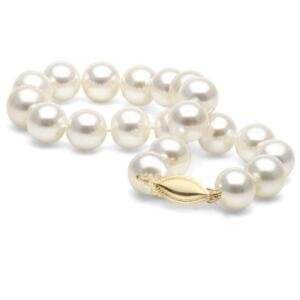
A. Throughout history, pearls have held a unique presence within the wealthy and powerful. For instance, the pearl was the favoured gem of the wealthy during the Roman Empire. This gift from the sea had been brought back from the orient by the Roman conquests. Roman women wore pearls to bed so they could be reminded of their wealth immediately upon waking up. Before jewellers learned to cut gems, the pearl was of greater value than the diamond. In the Orient and Persia Empire, pearls were ground into powders to cure anything from heart disease to epilepsy, with possible aphrodisiac uses as well. Pearls were once considered an exclusive privilege for royalty. A law in 1612 drawn up by the Duke of Saxony prohibited the wearing of pearls by the nobility, professors, doctors or their wives in an effort to further distinguish royal appearance. American Indians also used freshwater pearls from the Mississippi River as decorations and jewellery.
B. There are essentially three types of pearls: natural, cultured and imitation. A natural pearl (often called an Oriental pearl) forms when an irritant, such as a piece of sand, works its way into a particular species of oyster, mussel, or clam. As a defense mechanism, the mollusk secretes a fluid to coat the irritant. The layer upon layer of this coating is deposited on the irritant until a lustrous pearl is formed.
C. The only difference between natural pearls and cultured pearls is that the irritant is a surgically implanted bead or piece of shell called Mother of Pearl. Often, these shells are ground oyster shells that are worth significant amounts of money in their own right as irritant-catalysts for quality pearls. The resulting core is, therefore, much larger than in a natural pearl. Yet, as long as there are enough layers of nacre (the secreted fluid covering the irritant) to result in a beautiful, gem-quality pearl, the size of the nucleus is of no consequence to beauty or durability.
D. Pearls can come from either salt or freshwater sources. Typically, saltwater pearls tend to be higher quality, although there are several types of freshwater pearls that are considered high in quality as well. Freshwater pearls tend to be very irregular in shape, with a puffed rice appearance, the most prevalent. Nevertheless, it is each individual pearl’s merits that determines value more than the source of the pearl. Saltwater pearl oysters are usually cultivated in protected lagoons or volcanic atolls. However, most freshwater cultured pearls sold today come from China. Cultured pearls are the response of the shell to a tissue implant. A tiny piece of mantle tissue from a donor shell is transplanted into a recipient shell. This graft will form a pearl sac and the tissue will precipitate calcium carbonate into this pocket. There are a number of options for producing cultured pearls: use freshwater or seawater shells, transplant the graft into the mantle or the gonad, add a spherical bead or do it non-beaded. The majority of saltwater cultured pearls are grown with beads.
E. Regardless of the method used to acquire a pearl, the process usually takes several years. Mussels must reach a mature age, which can take up to 3 years, and then be implanted or naturally receive an irritant. Once the irritant is in place, it can take up to another 3 years for the pearl to reach its full size. Often, the irritant may be rejected, the pearl will terrifically misshapen, or the oyster may simply die from disease or countless other complications. By the end of a 5 to 10-year cycle, only 50% of the oysters will have survived. And of the pearls produced, only approximately 5% are of substantial quality for top jewellery makers. From the outset, a pearl farmer can figure on spending over $100 for every oyster that is farmed, of which many will produce nothing or die.
F. Imitation pearls are a different story altogether. In most cases, a glass bead is dipped into a solution made from fish scales. This coating is thin and may eventually wear off. One can usually tell an imitation by biting on it. Fake pearls glide across your teeth, while the layers of nacre on real pearls feel gritty. The Island of Mallorca (in Spain) is known for its imitation pearl industry. Quality natural pearls are very rare jewels. The actual value of a natural pearl is determined in the same way as it would be for other “precious” gems. The valuation factors include size, shape, and colour, quality of surface, orient, and lustre. In general, cultured pearls are less valuable than natural pearls, whereas imitation pearls almost have no value. One way that jewellers can determine whether a pearl is cultured or natural is to have a gem lab perform an x-ray of the pearl. If the x-ray reveals a nucleus, the pearl is likely a bead-nucleated saltwater pearl. If no nucleus is present, but irregular and small dark inner spots indicating a cavity are visible, combined with concentric rings of organic substance, the pearl is likely a cultured freshwater. Cultured freshwater pearls can often be confused for natural pearls which present as homogeneous pictures that continuously darken toward the surface of the pearl. Natural pearls will often show larger cavities where organic matter has dried out and decomposed. Although imitation pearls look the part, they do not have the same weight or smoothness as real pearls, and their luster will also dim greatly. Among cultured pearls, Akoya pearls from Japan are some of the most lustrous. A good quality necklace of 40 Akoya pearls measuring 7 mm in diameter sells for about $1,500, while a super- high-quality strand sells for about $4,500. Size, on the other hand, has to do with the age of the oyster that created the pearl (the more mature oysters produce larger pearls) and the location in which the pearl was cultured. The South Sea waters of Australia tend to produce the larger pearls; probably because the water along the coastline is supplied with rich nutrients from the ocean floor. Also, the type of mussel common to the area seems to possess a predilection for producing comparatively large pearls
G. Historically, the world’s best pearls came from the Persian Gulf, especially around what is now Bahrain. The pearls of the Persian Gulf were naturally created and collected by breath-hold divers. The secret to the special lustre of Gulf pearls probably derived from the unique mixture of sweet and saltwater around the island. Unfortunately, the natural pearl industry of the Persian Gulf ended abruptly in the early 1930s with the discovery of large deposits of oil. Those who once dove for pearls sought prosperity in the economic boom ushered in by the oil industry. The water pollution resulting from spilt oil and indiscriminate over-fishing of oysters essentially ruined the once pristine pearl-producing waters of the Gulf. Today, pearl diving is practised only as a hobby. Still, Bahrain remains one of the foremost trading centres for high-quality pearls. In fact, cultured pearls are banned from the Bahrain pearl market, in an effort to preserve the location’s heritage. Nowadays, the largest stock of natural pearls probably resides in India. Ironically, much of India’s stock of natural pearls came originally from Bahrain. Unlike Bahrain, which has essentially lost its pearl resource, traditional pearl fishing is still practised on a small scale in India.
Reading Passage 3 – Multitasking Debate
You should spend about 20 minutes on Questions 28-40, which are based on Reading Passage 3 below.

Can you do them at the same time?
A
Talking on the phone while driving isn’t the only situation where we’re worse at multitasking than we might like to think we are. New studies have identified a bottleneck in our brains that some say means we are fundamentally incapable of true multitasking. If experimental findings reflect real-world performance, people who think they are multitasking are probably just underperforming in all – or at best, all but one – of their parallel pursuits. Practice might improve your performance, but you will never be as good as when focusing on one task at a time.
B
The problem, according to René Marois, a psychologist at Vanderbilt University in Nashville, Tennessee, is that there’s a sticking point in the brain. To demonstrate this, Marois devised an experiment to locate it. Volunteers watch a screen and when a particular image appears, a red circle, say, they have to press a key with their index finger. Different coloured circles require presses from different fingers. Typical response time is about half a second, and the volunteers quickly reach their peak performance. Then they learn to listen to different recordings and respond by making a specific sound. For instance, when they hear a bird chirp, they have to say “ba”; an electronic sound should elicit a “ko”, and so on. Again, no problem. A normal person can do that in about half a second, with almost no effort.
C
The trouble comes when Marois shows the volunteers an image, and then almost immediately plays them a sound. Now they’re flummoxed. “If you show an image and play a sound at the same time, one task is postponed,” he says. In fact, if the second task is introduced within the half-second or so it takes to process and react to the first, it will simply be delayed until the first one is done. The largest dual-task delays occur when the two tasks are presented simultaneously; delays progressively shorten as the interval between presenting the tasks lengthens.
D
There are at least three points where we seem to get stuck, says Marois. The first is in simply identifying what we’re looking at. This can take a few tenths of a second, during which time we are not able to see and recognise a second item. This limitation is known as the “attentional blink”: experiments have shown that if you’re watching out for a particular event and a second one shows up unexpectedly any time within this crucial window of concentration, it may register in your visual cortex but you will be unable to act upon it. Interestingly, if you don’t expect the first event, you have to trouble to respond to the second. What exactly causes the attentional blink is still a matter for debate.
E
A second limitation is in our short-term visual memory. It’s estimated that we can keep track of about four items at a time, fewer if they are complex. This capacity shortage is thought to explain, in part, our astonishing inability to detect even huge changes in scenes that are otherwise identical, so-called “change blindness”. Show people pairs of near-identical photos – say, aircraft engines in one picture have disappeared in the other – and they will fail to spot the differences. Here again, though, there is disagreement about what the essential limiting factor really is. Does it come down to a dearth of storage capacity, or is it about how much attention a viewer is paying?
F
A third limitation is that choosing a response to a stimulus – braking when you see a child in the road, for instance, or replying when your mother tells you over the phone that she’s thinking of leaving your dad – also takes brainpower. Selecting a response to one of these things will delay by some tenths of a second your ability to respond to the other. This is called the “response selection bottleneck” theory, first proposed in 1952.
G
But David Meyer, a psychologist at the University of Michigan, Ann Arbor, doesn’t buy the bottleneck idea. He thinks dual-task interference is just evidence of a strategy used by the brain to prioritise multiple activities. Meyer is known as something of an optimist by his peers. He has written papers with titles like “Virtually perfect time-sharing in dual-task performance: Uncorking the central cognitive bottleneck”. His experiments have shown that with enough practice – at least 2000 tries – some people can execute two tasks simultaneously as competently as if they were doing them one after the other. He suggests that there is a central cognitive processor that coordinates all this and, what’s more, he thinks it used discretion: sometimes it chooses to delay one task while completing another.
H
Marois agrees that practice can sometimes erase interference effects. He has found that with just 1 hour of practice each day for two weeks, volunteers show a huge improvement at managing both his tasks at once. Where he disagrees with Meyer is in what the brain is doing to achieve this. Marois speculates that practice might give us the chance to find less congested circuits to execute a task – rather like finding trusty back streets to avoid heavy traffic on main roads – effectively making our response to the task subconscious. After all, there are plenty of examples of subconscious multitasking that most of us routinely manage: walking and talking, eating and reading, watching TV and folding the laundry.
I
It probably comes as no surprise that, generally speaking, we get worse at multitasking as we age. According to Art Kramer at the University of Illinois at Urbana- Champaign, who studies how ageing affects our cognitive abilities, we peak in our 20s. Though the decline is slow through our 30s and on into our 50s, it is there; and after 55, it becomes more precipitous. In one study, he and his colleagues had both young and old participants do a simulated driving task while carrying on a conversation. He found that while young drivers tended to miss background changes, older drivers failed to notice things that were highly relevant. Likewise, older subjects had more trouble paying attention to the more important parts of a scene than young drivers.
J
It’s not all bad news for over-55s, though. Kramer also found that older people can benefit from the practice. Not only did they learn to perform better, but brain scans also showed that underlying that improvement was a change in the way their brains become active. While it’s clear that practice can often make a difference, especially as we age, the basic facts remain sobering. “We have this impression of an almighty complex brain,” says Marois, “and yet we have very humbling and crippling limits.” For most of our history, we probably never needed to do more than one thing at a time, he says, and so we haven’t evolved to be able to. Perhaps we will in future, though. We might yet look back one day on people like Debbie and Alun as ancestors of a new breed of true multitaskers.
You need to be registered and logged in to take this quiz. Log in